

In Brief
- Do Kwon was sentenced to 15 years in US federal prison on Thursday, Dec. 11, 2025, over fraud tied to Terraform Labs.
- The case centers on TerraUSD (UST) and Luna, which collapsed in May 2022 and erased an estimated $40 billion in investor value.
- Prosecutors said Kwon misled investors about Terra’s stability and adoption, including claims about the system’s ability to restore UST’s $1 peg.
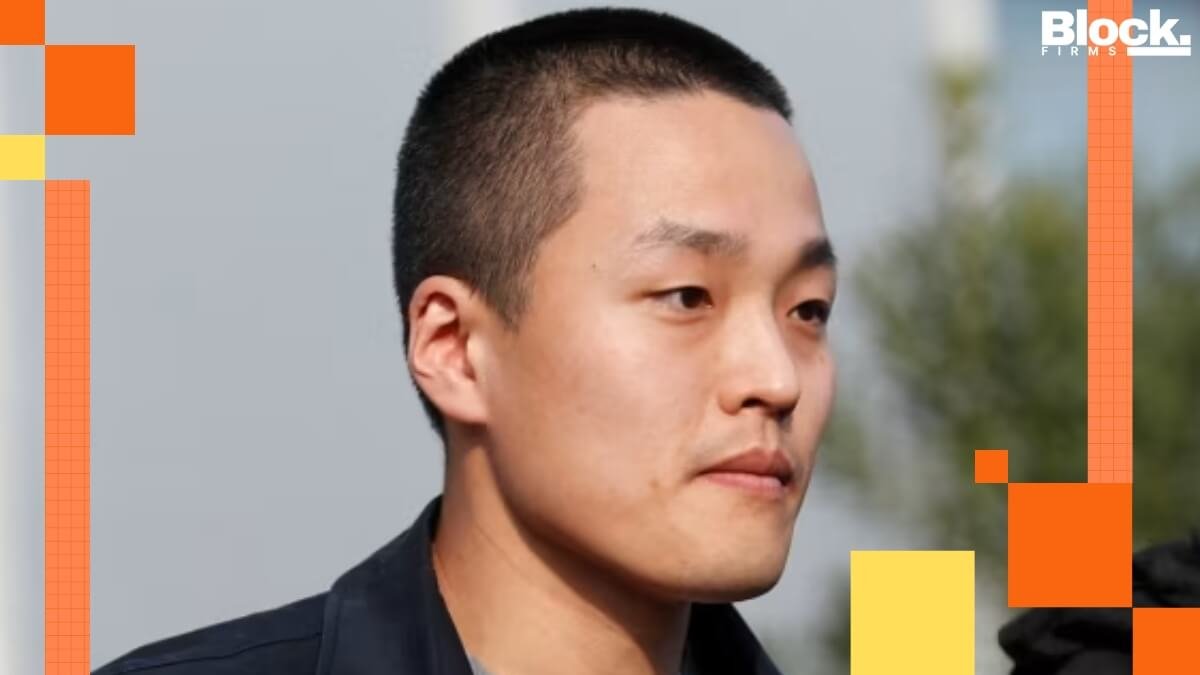
Do Kwon, the Terraform Labs co-founder whose TerraUSD stablecoin and sister token Luna imploded in 2022, was sentenced to 15 years in US federal prison on Thursday, Dec. 11, 2025. The verdict came after Do Kwon admitted to fraud tied to a collapse that erased an estimated $40 billion in value and turned into a broader crypto-market rout.
US District Judge Paul A. Engelmayer imposed a punishment that exceeded what prosecutors had sought in the plea deal—underscoring how aggressively US authorities are now treating crypto-era misconduct that blends market structure novelty with old-fashioned deception. In court, Engelmayer described the conduct as a sweeping fraud, while victims detailed life-altering losses.
“Do Kwon devised elaborate schemes to mislead investors and inflate the value of Terraform’s cryptocurrencies for his own benefit,” Jay Clayton, said in a press release related to the verdict.
Kwon, 34, had pleaded guilty in August 2025 to wire fraud and a conspiracy count spanning securities, commodities and wire fraud, and was ordered to forfeit more than $19 million in proceeds, according to the US Attorney’s Office for the Southern District of New York.
A flagship of the boom—and the template for a “death spiral”
Terraform Labs was founded in 2018, pitching a vision of a “decentralized” financial system built around tokens that could function as money, payments, savings and trading rails. Central to that pitch was TerraUSD (UST), marketed as an “algorithmic stablecoin” designed to hold $1 through a mint-and-burn mechanism with LUNA, the network’s volatile absorber token.
In practice, the system relied on constant confidence: when UST traded below $1, arbitragers were supposed to buy UST and swap it for $1 worth of LUNA, shrinking UST supply and restoring the peg. When confidence cracked, that mechanism could run in reverse—creating more LUNA, pushing LUNA’s price down, and triggering further panic. Academic and policy analyses of the episode describe dynamics consistent with a modern run: rapid exits, reflexive selling and a feedback loop that overwhelmed stabilizing tools.
The rise: yield, “real-world use,” and a massive market cap
Terra’s ascent coincided with the 2020–2021 crypto boom and the rapid growth of decentralized finance. One magnet was Anchor, a Terra-based protocol that offered yields that at times approached ~20% on UST deposits—returns that drew billions of dollars into the ecosystem and concentrated demand for the stablecoin.
Prosecutors said Kwon used this momentum to position Terraform as a functioning, self-sustaining DeFi universe—while, behind the scenes, key parts of the story were either exaggerated or manufactured. At its peak in spring 2022, the combined market value of UST and LUNA exceeded $50 billion, according to the Justice Department’s description of the case.
What prosecutors said was fraudulent
The criminal case was built around allegations that Terraform’s “decentralized” narrative masked intervention, manipulation and false claims of adoption.
1. The “self-healing” peg that wasn’t.
Kwon publicly claimed that Terra’s algorithm restored UST’s peg after an earlier de-pegging episode in May 2021. Prosecutors said that was false: after the algorithm failed, Kwon allegedly reached an agreement with a high-frequency trading firm to buy UST to artificially support the peg, then portrayed the recovery as proof the system worked.
2. Governance and reserves.
Kwon also allegedly misrepresented the independence of the Luna Foundation Guard (LFG)—a reserve entity announced in early 2022 that accumulated assets to defend UST—while maintaining control and, prosecutors say, treating funds as interchangeable and misappropriating assets. Separately, in the months before the crash, LFG’s planned buildout of bitcoin reserves was widely tracked; a Reuters analysis in April 2022 described efforts to amass $10 billion in Bitcoin, with holdings at that time estimated at nearly 40,000 BTC.
3. Adoption claims: Mirror and Chai.
Authorities said Kwon misled investors about the decentralization and adoption of products such as Mirror Protocol and about Terra’s alleged transaction processing for the Korean payments app Chai, claiming “real-world” usage while prosecutors said transactions actually ran through traditional rails and were copied onto the blockchain to create an illusion of activity.
The crash: May 2022
UST’s peg began to break down again in early May 2022, as outflows accelerated from Anchor and selling pressure hit UST liquidity pools. Coindesk reported that Anchor deposits fell sharply as the peg wobbled, while policy analysis later framed the event as a classic run risk in a structure that lacked durable collateral.
LFG said it depleted most of its reserves trying to defend the peg; a Reuters report from May 16, 2022 cited LFG statements that reserves had fallen drastically after interventions.
The result was the “death spiral”: UST fell far below $1 and LUNA collapsed from triple-digit prices to near-zero within days. A Research paper titled “Anatomy of a Stablecoin’s failure: The Terra-Luna case” by Antonio Briola, David Vidal-Tomás, Yuanrong Wang, and Tomaso Aste, published on ScienceDirect, reconstruct the rapid deterioration between May 5 and May 13, 2022, with price and supply dynamics that overwhelmed the algorithmic mechanism.
“Do Kwon actually had the right idea, but just failed miserably on execution,” Binance founder, Changpeng Zhao, earlier commented on a X post.
The Terra blowup became a key accelerant of 2022’s broader crypto deleveraging cycle—adding stress to lenders, funds and market structure already pressured by rising rates and falling risk appetite. It resulted spillovers across major tokens and even brief instability in other stablecoins during the same week.
Aftermath: reboot attempts and the legal dragnet
Terraform’s community later approved a proposal to launch a new chain and abandon the failed stablecoin design, creating what became informally known as “Terra 2.0,” while the original network continued as “Terra Classic.”
Regulators, meanwhile, moved in on multiple fronts.
- SEC civil case: In February 2023, the SEC charged Terraform and Kwon with defrauding investors.
- Jury verdict and settlement: After a jury found liability, the SEC announced in July 2024 that Terraform and Kwon agreed to pay more than $4.5 billion in disgorgement, interest and penalties.
- Bankruptcy: Terraform Labs filed for Chapter 11 protection in January 2024, listing assets and liabilities in the $100 million to $500 million range, Reuters reported at the time.
Flight, arrest, extradition, and the US case
After the crash, Kwon left Singapore and became the subject of overlapping investigations. US authorities later said he tried to move internationally using fraudulent travel documents.
Kwon was arrested on March 23, 2023, in Montenegro while allegedly attempting to travel on a fraudulent passport, according to the US Justice Department’s account of the case.
Montenegro ultimately extradited Kwon to the US. The Justice Department said he arrived in the United States on Dec. 31, 2024, and made his initial court appearance in Manhattan soon after.
In August 2025, Kwon pleaded guilty in a federal court, admitting to criminal schemes that led to massive investor losses.
Why Do Kwon Sentenced to 15 years, more than prosecutors sought
The sentencing capped one of crypto’s most consequential boom-to-bust stories—and one of the most watched tests of how US courts would weigh market novelty against alleged deception.
Prosecutors had recommended a lower term under the plea framework, while Kwon’s lawyers argued for leniency. Engelmayer went further, delivering a 15-year sentence, citing the scale of the damage and the need for deterrence, according to reports from AP.
The US Attorney’s Office said Kwon was sentenced for wire fraud and conspiracy involving securities, commodities and wire fraud, and reiterated allegations that Terraform’s core products were manipulated “to create the illusion” of a functioning decentralized financial system.
Why it matters for crypto markets now
Kwon’s case has become a reference point in three debates that continue to shape the digital-asset market:
- Stablecoin design: The Terra episode remains the most vivid demonstration of how algorithmic pegs can fail under stress, influencing both investor skepticism and regulatory focus on reserves, redemption mechanics and disclosure.
- DeFi yield marketing: Anchor’s high, engineered yields were central to Terra’s growth narrative—fueling arguments that “risk-free” crypto returns often embed structural fragility.
- Enforcement posture: A 15-year prison term signals that US authorities will pursue crypto fraud using mainstream financial-crime statutes and seek punishments that match the scale of harm, even when products are novel.
More Like This on BlockFirms
Disclaimer: This article is for informational purposes only and does not constitute investment advice.
AI Disclaimer: Parts of this article were drafted with the assistance of AI tools and subsequently reviewed, edited, and verified by the author and our editorial team to ensure accuracy and journalistic integrity. The final version reflects human editorial judgment and fact-checking.


