


Peter McCormack’s broadside against governments on X quickly turned into a familiar crypto culture clash: what — if anything — is worth trusting.
McCormack, who hosts The Peter McCormack Show and the Bitcoin podcast What Bitcoin Did, argued that voters should assume the state will “always concentrate power” and push for “maximum limitation of the state,” framing distrust of government as rational rather than cynical.
Peter Schiff — the longtime gold advocate and frequent Bitcoin critic who runs SchiffGold and has built a media career warning about fiat debasement — jumped into the thread with a jab aimed at the other pillar of crypto ideology: “If you trust Bitcoin you are also an idiot,” he wrote, repeating the line for emphasis.
Changpeng “CZ” Zhao, Binance’s co-founder and former CEO, responded with sarcasm of his own: “Better trust something you ‘don’t know’?”
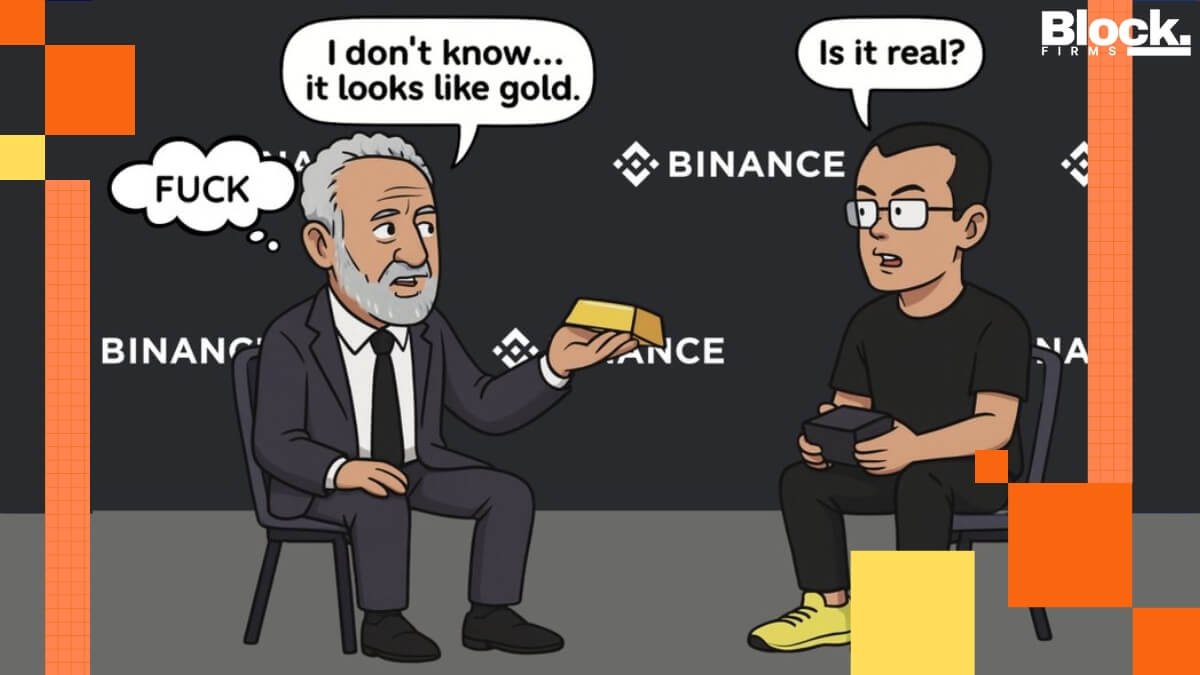
The remark wasn’t random. It leaned on a moment from a recent on-stage exchange between Zhao and Schiff in Dubai at Binance Blockchain Week, where Zhao handed Schiff a gold bar and pressed him on authenticity. Schiff inspected it and said he couldn’t confirm it was real — a clip that ricocheted around crypto social media as a tidy illustration of Bitcoiners’ core argument: that digital scarcity is easier to verify than physical commodities without intermediaries.
Zoomed out, the back-and-forth highlighted a recurring split inside “sound money” circles. Schiff’s brand of skepticism treats Bitcoin as an asset whose value depends on belief and future buyers, while Bitcoin proponents argue the protocol’s transparent supply schedule and settlement rules reduce reliance on institutions — even if price is volatile. The irony, as Zhao’s gold-bar stunt tried to show, is that gold’s real-world guarantees can also hinge on trust: in custody, assays, and counterparties.
Zhao’s presence in the debate carries its own baggage. He resigned as Binance CEO in 2023 as part of a US resolution over compliance failures, and later served a short prison sentence; in October 2025, President Donald Trump issued a pardon, a move that reignited partisan arguments about whether Washington is going softer on crypto’s biggest players.
For McCormack’s audience — steeped in Bitcoin’s anti-establishment origins — Schiff’s insult and Zhao’s retort land less as policy commentary than as a micro-drama about credibility: distrust the state, distrust Bitcoin, or distrust the human systems that sit between investors and whatever asset they choose to hold. The thread didn’t resolve the question. It mostly showed why the trust debate keeps resurfacing — in markets, in politics, and now in the replies.
Disclaimer: This article is for informational purposes only and does not constitute investment advice.
AI Disclaimer: Parts of this article were drafted with the assistance of AI tools and subsequently reviewed, edited, and verified by the author and our editorial team to ensure accuracy and journalistic integrity. The final version reflects human editorial judgment and fact-checking.