


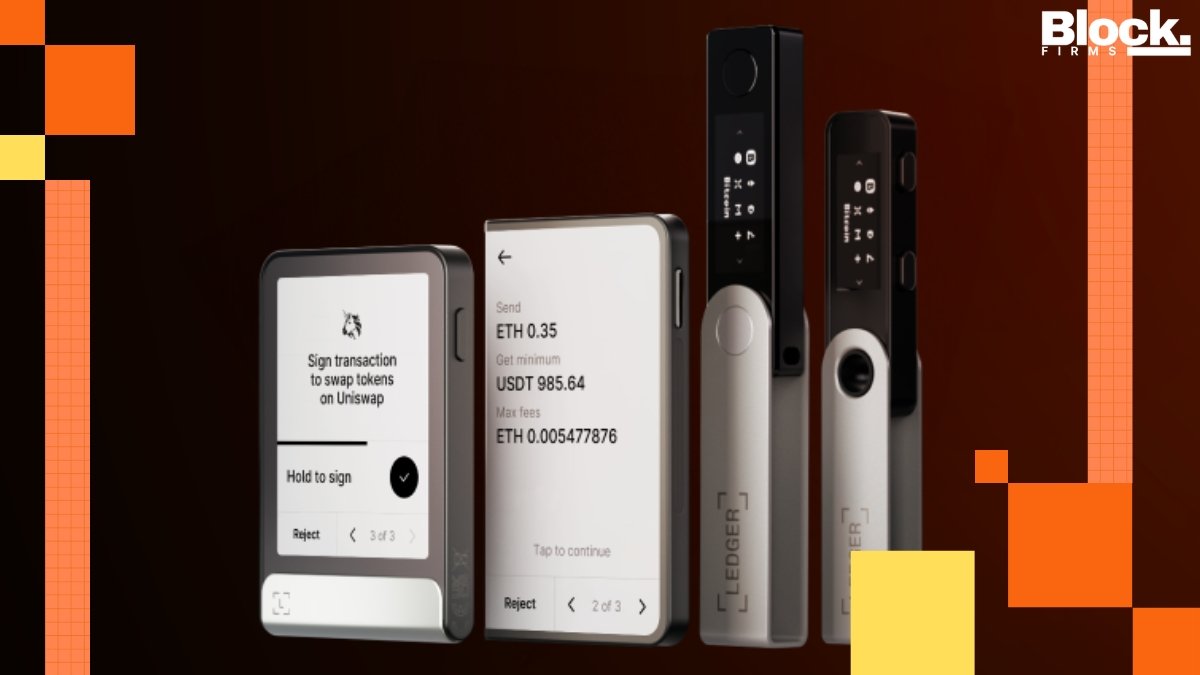
Crypto wallet firm Ledger is pushing its hardware-wallet business into one of crypto’s most lucrative and high-risk trading markets.
The Paris-based digital asset security company has started rolling out perpetual trading inside Ledger Wallet to an initial 20% of users in select regions, according to an announcement shared by the company. The service is provided by Yield.xyz and connects users to Hyperliquid, the decentralized derivatives venue that has become one of the most active platforms for onchain perpetual futures.
The move brings leveraged trading closer to the self-custody model that Ledger has long promoted.
It also reflects a broader shift in crypto trading: wallets are no longer just storage tools. They are becoming front ends for trading, staking, payments and yield products.
Ledger said users will be able to access onchain liquidity while keeping control of their private keys. Deposits and withdrawals are designed to be clear-signed and verified through Ledger’s secure hardware, reducing reliance on browser wallets and software-only signing flows. Ledger’s own education material describes clear signing as a way to show users human-readable transaction details before approval, rather than asking them to approve opaque contract interactions.
“With the launch of Perpetual Trading in Ledger Wallet, we’re bringing hardware-grade security to one of crypto’s fastest-growing segments,” said JF Rochet, executive vice president of consumer services at Ledger. “Ledger ensures that users who choose to trade in these markets can do so directly using their self-custodial wallets, without compromising control of their assets.”
The product does not remove the financial risk of leverage.
It changes the custody and transaction-signing environment around the trade. That distinction matters because perpetual futures allow traders to take long or short positions without expiry, often with significant leverage.
Crypto perpetuals have become a core market structure for digital assets. Reuters reported last month that perpetual futures volume reached $61.7 trillion in 2025, far above spot crypto trading, while firms including Kraken, Coinbase, Robinhood and Gemini have been positioning for regulated U.S. products.
Ledger’s entry is focused outside several restricted markets. The company said the service is not intended for users in jurisdictions including the U.S., U.K., Ontario, France and Belgium.
Why does the Launch of Perpetual Trading within Ledger Wallet matter?
The announcement sits at the intersection of two competing trends.
On one side, traders increasingly want exchange-like speed, leverage and access to global markets from inside wallet interfaces. On the other, the last several years have shown the danger of leaving assets on centralized venues or signing complex transactions through browser-based workflows.
Ledger is trying to make the wallet the trading terminal.
That is a different proposition from a centralized exchange account, where custody, matching, margin and user balances are usually controlled within a single venue. In Ledger’s model, the wallet acts as the secure interface and signing layer, while Yield.xyz provides the trading environment and Hyperliquid supplies the underlying venue.
Hyperliquid has become central to this trend.
The platform is a high-performance Layer-1 blockchain with an integrated decentralized exchange best known for perpetual futures, using an order-book model rather than the automated market maker structure common in DeFi. Ledger had already integrated Hyperliquid’s HYPE token into Ledger Wallet in late 2025, allowing users to buy, send, receive and swap HYPE inside its ecosystem.
Hyperliquid’s market reach has grown quickly. 21Shares said in April that Hyperliquid commanded more than 50% of decentralized perpetual open interest and processed roughly $8 billion in daily volume, with more than $4 trillion in cumulative volume since inception.
The platform has also expanded beyond crypto-native assets.
In March, S&P Dow Jones Indices licensed the S&P 500 to Trade[XYZ] for a perpetual contract on Hyperliquid, giving eligible non-U.S. investors 24/7 onchain access to leveraged exposure tied to the benchmark index
That shows how perpetuals are becoming a bridge between crypto market structure and traditional financial exposure.
Wallets Are Becoming Trading Platforms
Ledger is not alone in trying to bring perpetuals into the wallet experience.
MetaMask has also partnered with Hyperliquid to offer perpetual futures from inside its wallet interface, with trading across crypto assets, equities, commodities and currencies. The company says users can trade with up to 50x leverage and fund accounts using EVM tokens.
Phantom moved in the same direction in 2025, rolling out built-in perpetual trading powered by Hyperliquid for users in Europe. Reports at the time described the feature as allowing users to trade perpetual contracts directly within the wallet interface.
Trust Wallet has also positioned perps as a self-custody product, advertising perpetual futures trading through Aster DEX and Hyperliquid without requiring users to create a centralized exchange account.
The pattern is clear.
Perpetual trading is moving from dedicated exchange screens into consumer wallet interfaces. The result could be a larger addressable market for decentralized derivatives, but also a more complex risk environment for retail users.
The Security Pitch
Ledger’s core argument is not that it makes leverage safer.
It argues that users should not have to move assets out of hardware-secured custody to participate in active markets. That is especially relevant in DeFi, where users often interact through browser extensions, sign multiple approvals and rely on interfaces that can be exposed to phishing, spoofing or blind-signing risks.
Ledger says clear signing and hardware verification reduce that attack surface. Its academy material says clear signing uses a trusted screen to show users the transaction details, so they can verify what they are approving before signing.
That may appeal to experienced traders who already understand liquidation, funding rates and margin risk.
But it also raises a product-design challenge. A safer signing flow can reduce operational and custody risks. It cannot prevent a user from taking excessive leverage, entering illiquid markets or being liquidated during volatile moves.
Ledger acknowledges this distinction, saying it secures the environment without changing the risk of the trade.
The Bigger Picture
The launch points to a more competitive phase for wallet providers.
For years, wallets competed mainly on security, chain support and user experience. Now they are competing on access to financial activity: swaps, staking, tokenized assets, perps and payments.
That gives companies like Ledger a path to expand beyond device sales and into recurring transaction-based services.
It also intensifies regulatory scrutiny. Perpetuals are speculative instruments, and access remains restricted in several major jurisdictions. Reuters reported that U.S. market participants are preparing for possible rule changes, but investor-protection concerns remain central to the debate.
Ledger’s rollout is therefore significant but narrow.
It brings hardware-wallet security into a market that has largely grown through exchanges, software wallets and high-speed trading interfaces. But its success will depend on whether users value hardware-level signing enough to trade through Ledger Wallet, and whether regulators allow wallet-based derivatives access to expand.
For crypto, the signal is larger than Ledger.
The next phase of derivatives trading may not be defined only by exchanges. It may also be shaped by the wallets that control the user relationship, the signing layer and the point at which traders decide how much risk to take.
More From BlockFirms
Disclaimer: This article is for informational purposes only and does not constitute investment advice. Read our Editorial Policy. Parts of this article were drafted/ researched with the assistance of AI tools and subsequently reviewed, edited, and verified by the author and our editorial team to ensure accuracy and journalistic integrity. The final version reflects human editorial judgment and fact-checking. Read our AI Policy.
Image Credits: Canva